
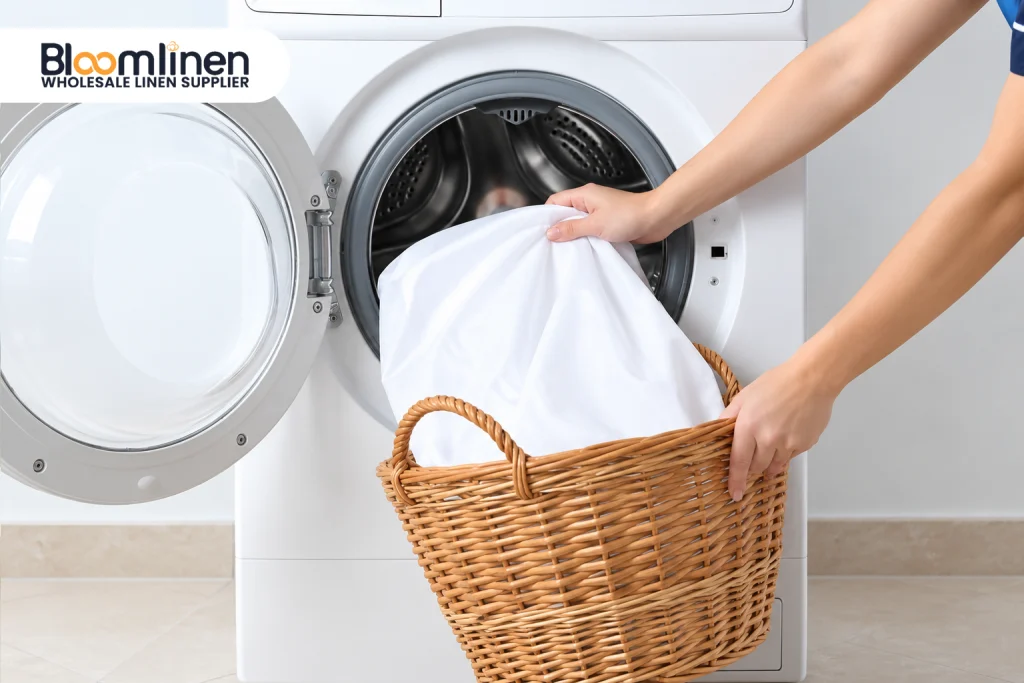
Protecting mattresses is one of the most critical capital preservation strategies for any hospitality operation. High-grade commercial mattresses represent a major financial investment, and their operational lifespan depends almost entirely on how effectively housekeeping teams manage protective barriers.
While quality protectors stop liquid spills, body oils, and allergens from reaching expensive bed cores, improper laundering can permanently ruin their waterproof linings. Achieving clinical-grade sanitization without causing membrane delamination requires a standardized, step-by-step laundry process across your housekeeping staff.
Key Takeaways:
- Standardize low-water temperatures and neutral pH detergents to prevent membrane damage.
- Control dryer heat levels strictly to avoid melting waterproof polyurethane backings.
- Maintain a 3-PAR inventory ratio to eliminate rushed, damaging drying cycles.
Steps to Clean Mattress Protectors in Hotels
The following are tips to wash commercial mattress protectors:
|
Laundry Step |
Key Operational Standard |
|
1. Onboarding & Turnover |
Wash new inventory before use; inspect at turnover and retire aged units. |
|
2. Pre-Wash & Sorting |
Isolate from coarse linens, inspect for pests, and pre-treat organic stains. |
|
3. Machine Wash Cycle |
Use 90°F–105°F water with neutral pH detergent; avoid bleach and softeners. |
|
4. Commercial Drying |
Dry on low heat (110°F–125°F) with clean cotton towels to prevent sticking. |
|
5. Inventory & Storage |
Audit barriers post-dry and maintain a strict 3-PAR stock in cool closets. |
Step 1: Onboarding, Replacement & Turnover Protocols
Every mattress protector’s journey begins before it ever touches a guest bed. Onboarding new inventory requires a mandatory pre-use wash protocol. Fresh, factory-sealed protectors carry manufacturing residues, chemical sizing, and dust from transit. Running a preliminary wash cycle clears these processing agents, softens the fabric face for quieter guest sleep, and activates the natural absorbency of the top textile layer.
Once in rotation, managing bedding care requires establishing a clear operational routine between daily bed linen schedules and secondary protective layers. While guest sheets and pillowcases interact directly with skin and must be laundered after every stay, fitted mattress protectors serve as an underlying defensive barrier. In standard turnover workflows, protectors require full laundering whenever soiled or stained, while a thorough physical inspection during room turns ensures ongoing hygiene between deep-clean rotations.
Tracking the operational lifecycle of your protectors is equally essential for budget planning. In high-volume commercial environments, a quality protector typically maintains its protective integrity for 1 to 3 years, depending on PAR levels and wash frequency. Housekeeping staff should routinely inspect units for cracking, peeling polyurethane, pinhole leaks, or stretched corner elastics. Once the internal barrier degrades, the protector can no longer guarantee mattress protection and should be retired from inventory.
Step 2: Pre-Wash Sorting, Pest Inspection & Stain Pre-Treatment
Before loading commercial washer-extractors, proper prep work prevents accidental mechanical damage to specialized textiles while ensuring pest risks are identified early.
Bed bugs and microscopic pests remain a constant risk in hospitality environments. Standard fitted pad protectors shield the top sleeping surface from liquid damage, but their elastic skirts and stitched seams can still provide hiding spots for pests if room inspections are neglected. To completely seal a mattress against infestation, properties rely on six-sided zippered encasements.
When prepping loads:
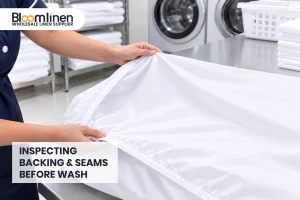
- Inspect for Pests and Damage: Check seams, piping, and skirts for signs of bed bugs, tearing, or peeling before placing items into wash bins.
- Isolate from Abrasive Linens: Never mix mattress protectors with heavy, coarse textiles. Items featuring metal zippers, heavy industrial towels, or exposed hook-and-loop fasteners can puncture or tear thin waterproof linings during high-speed wash cycles.
- Pre-Treat Specific Stains: Apply mild, enzyme-based stain removers directly to organic spots or fluid stains prior to loading. Avoid aggressive wire-brush scrubbing on the internal membrane face.
Step 3: Configuring the Commercial Washer Setup & Chemical Dosing
Standard commercial washer-extractors are fully equipped to handle high-volume mattress protector loads, but machine parameters must be adjusted to protect sensitive synthetic barriers. High-capacity extraction applies intense centrifugal force that can trap water against non-porous linings, leading to fabric ballooning, seam blowouts, or backing separation if spin speeds are set too high. Keep G-force extract speeds at a moderate level.
Water temperature control is the most critical variable during the wash phase:
- Ideal Temperature Range: Maintain wash water between 90°F and 105°F (32°C to 40°C).
- Thermal Threshold Limits: Water temperatures exceeding 140°F (60°C) cause polyurethane backings to blister, crack, or delaminate from the face fabric. Sanitization must be achieved through proper chemical formulation rather than extreme heat.
Chemical selection requires strict adherence to material compatibility:
- Neutral pH Detergents: Use mild liquid commercial detergents that clean thoroughly without breaking down synthetic backings.
- Avoid Chlorine Bleach: Harsh bleaching agents strip waterproof coatings and yellow synthetic fibers. Use oxygen-based brighteners when whitening is necessary.
- Eliminate Fabric Softeners: Liquid softeners leave a silicone residue that clogs breathable membrane pores, drastically reducing the protector’s absorbency and liquid resistance.
Step 4: Executing Safe Commercial Drying Protocols
Drying is where the majority of membrane damage occurs in commercial laundries. Industrial tumble dryers running at standard high heat will melt or warp synthetic linings in minutes, rendering inventory unusable.
To safely dry protectors in commercial machines, execute the following parameters:
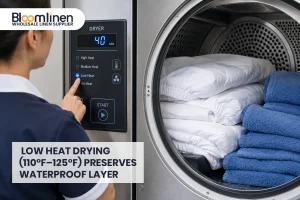
- Calibrate Heat Settings: Set dryers strictly to Low Heat (110°F to 125°F / 43°C to 52°C) or utilize an unheated air-dry cycle.
- Apply the Towel Co-Drying Technique: Add clean, dry cotton towels to each load. The towels absorb loose surface moisture and prevent non-porous backings from sticking to themselves or hot dryer drums.
- Unload Immediately: Remove protectors as soon as the cycle finishes to prevent heat-contact burns while the drum sits idle.
Step 5: Post-Wash Inspection, Storage & Inventory Management
The final operational step occurs after the drying cycle ends. Before folding, laundry attendants should perform a quick barrier audit, checking for residual dampness in corner pockets, backing adhesion, and seam stress. Storing damp protectors can invite mildew growth in linen closets.
Maintaining high housekeeping standards behind the scenes requires a structured inventory management system. Properties should operate on a strict 3-PAR rotation model:
- PAR 1: In active use on guest beds.
- PAR 2: Clean and stocked in floor linen closets for immediate turnovers.
- PAR 3: Processing through the laundry cycle.
Adequate PAR ratios ensure laundry staff are never forced to run harsh, high-heat drying cycles or shorten wash formulas to rush room turns. Clean inventory should always be stored flat or folded in cool, dry, well-ventilated spaces away from direct UV light, which degrades synthetic elastics and waterproof membranes over time.
Designed for Commercial Laundries: The Bloom Linen Solution
Maintaining high-volume laundering schedules requires protective bedding built specifically for commercial demands. Bloom Linen offers institutional-grade mattress pads, waterproof terry encasements, and quilted fitted protectors engineered to withstand repeated industrial wash cycles without membrane breakdown or shrinkage.
With features like noiseless waterproof barriers, full zippered pest defense, and stretch skirts designed for fast housekeeping turnovers, Bloom Linen provides hospitality properties across Canada with durable, procurement-ready inventory that preserves mattress investments for years to come.
Bloom Linen’s Commercial Mattress Protector Catalog
To support high-volume hospitality demands, Bloom Linen supplies institutional-grade mattress protection engineered specifically for industrial wash cycles and fast room turns. Our commercial lineup includes noiseless polyurethane fitted protectors, heavy-duty quilted mattress pads, and six-sided zippered bed bug encasements that preserve mattress investments without sacrificing guest comfort.
Designed with durable stretch skirts and long-lasting waterproof barriers, Bloom Linen provides Canadian hoteliers, motels, and care facilities with procurement-ready inventory built to maintain strict hygiene standards and maximize asset lifespan.
Conclusion
By standardizing these six steps across your housekeeping and laundry operations, your property can maintain hospital-grade sanitation standards while maximizing the lifespan of both your mattress protectors and underlying mattress investments. Implementing clear pre-wash inspections, controlled wash-extractor parameters, and low-heat drying protocols prevents costly membrane damage and reduces premature replacement expenses.
Partnering with a reliable commercial supplier like Bloom Linen ensures your team stays equipped with durable, high-PAR inventory that keeps room turnarounds efficient and guest satisfaction consistently high.