
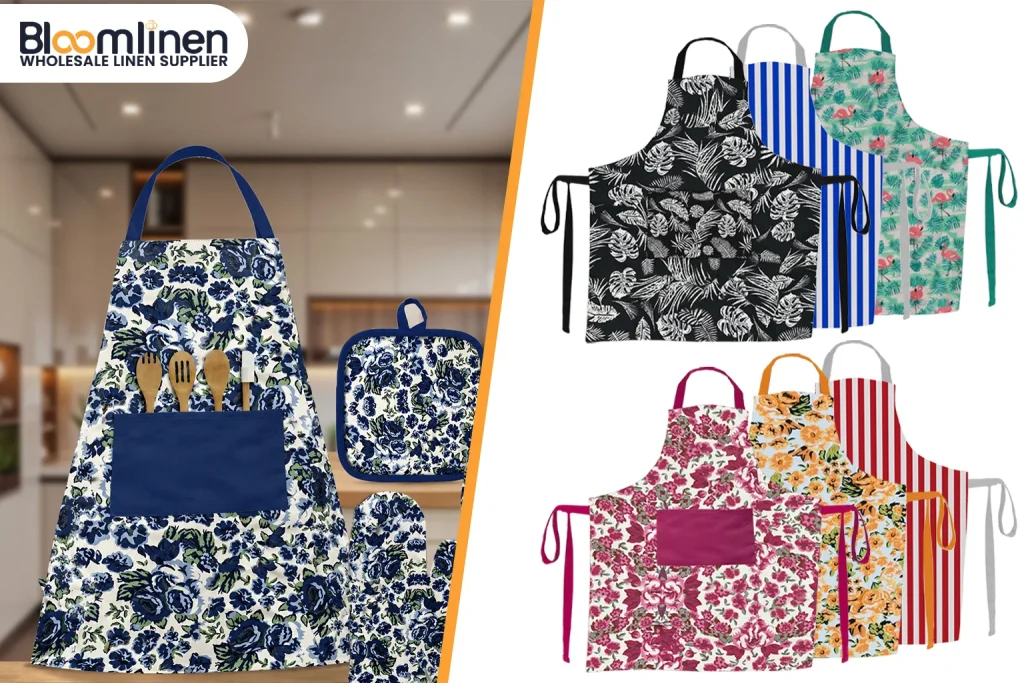
An apron is far more than a simple piece of cloth; it is an essential piece of functional kitchen equipment. In any active culinary space, a quality apron serves as a first line of defense against high heat, hot oil splatters, severe staining, and mechanical wear. Beyond protection, it functions as a personal workstation, offering quick access to essential tools like timers, pens, and kitchen towels.
This guide provides an objective, technical framework for selecting an apron based on structural ergonomics, material weight, hardware quality, and specific culinary roles. Whether you are a commercial line cook, an artisanal baker, or a home enthusiast in Canada, this guide will help you evaluate what to look for before making a purchase.
Key Takeaways:
- Full 42″ x 32″ x 36″ coverage protects against heat, grease, and splatters.
- Reinforced stitching ensures long-lasting durability through repeated industrial washing cycles.
- Integrated 3-piece sets provide complete torso and hand heat protection.
What Commercial Kitchens Should Consider When Buying Aprons
1. Coverage & Sizing Metrics
The physical dimensions of an apron determine how effectively it protects the wearer during active kitchen work:
- Full-Coverage Bib Aprons: A full bib apron provides continuous protection from the chest down past the waist. Sizing in the 42″ x 32″ x 36″ range offers optimal coverage, protecting both the front torso and the lap against splatters, spills, and heat across a wide variety of body sizes.
- Proportional Fit: A generous length and width ensure that grease and dry ingredients like flour do not reach side clothing during heavy mixing or high-temperature cooking.
2. Seam Construction & Durability
An apron is subjected to continuous movement, pulling, and repeated laundering. The primary indicator of longevity is structural reinforcement:
- Reinforced Stitching: Stress points, particularly along the waist ties, neck loop connection points, and hemmed edges, must feature dense, reinforced stitching. This prevents unraveling and tearing under regular commercial or heavy home use.
- Hem Edge Integrity: Double-folded stitched hems prevent fraying over time, ensuring the garment maintains its shape and appearance after continuous wash cycles.
3. Fabric Selection & Maintenance
Selecting the right fabric involves balancing protection, comfort, and ease of care:
- Durable Woven Blends: Fabric designed for regular kitchen use must offer a comfortable, breathable fit while holding up against routine wash cycles. High-density woven fabrics resist tearing and maintain their structural integrity over time.
- Color Fastness & Maintenance: Kitchen apparel requires frequent laundering to maintain hygiene. Choosing fabrics engineered for machine washing ensures that deep colors and detailed patterns remain vibrant without premature fading.
Choosing the Right Apron for Your Needs
The right apron depends on the specific use case. Therefore, we have made a comprehensive description that what design aprons are commonly used in which areas:
Kitchen Role | Recommended Feature Focus |
Line Cooking & Grilling | Full-coverage 42″ x 32″ x 36″ bib for chest-to-knee splatter protection |
Baking & Pastry Prep | Striped or floral patterns to conceal flour dust, paired with oven mitts |
Commercial Kitchen Staff | Reinforced seam stitching engineered for repeated laundering cycles |
Catering & Open Kitchens | Coordinated colorways to maintain a uniform staff appearance |
1. Best Chef Aprons (Professional & Heavy-Duty Use)
Line cooking and commercial prep require straightforward, reliable gear built for regular use:
- What to Look For: Generous full-torso coverage to guard against splatters, reinforced stress points to handle continuous motion, and low-maintenance fabrics that withstand frequent laundering.
- Recommended Specs: 42″ x 32″ x 36″ bib dimensions, heavy-duty reinforced stitching, and classic full-coverage styling.
2. Best Men’s Aprons for Cooking & Grilling
Grilling and open-flame cooking demand wide coverage and reliable heat protection across the entire front body:
- What to Look For: Broad bib proportions that protect the chest and lap, extended length to block flying embers or grease, and durable construction.
- Recommended Specs: Full-length 42″ x 32″ x 36″ dimensions for maximum coverage and secure waist ties.
3. Best Aprons for Bakers & Pastry Chefs
Baking environments involve fine airborne dust, flour splatters, and direct handling of hot baking sheets:
- What to Look For: Full front coverage to keep flour off clothing, breathable fabric for warm bakery settings, and visual patterns that handle dusty environments gracefully.
- Recommended Specs: Generous bib coverage paired with functional thermal protection tools like matching oven mitts and potholders.

Complete Bundles vs Standalone Aprons
When outfitting a kitchen, individual aprons cover body protection, but handling hot cookware requires dedicated thermal insulation. Complete kitchen sets—combining a full-coverage apron with matching potholders and oven mitts—provide a unified functional solution for both home cook stations and commercial prep lines.
Key Advantages of 3-Piece Sets (Apron, Potholder, & Oven Mitt)
- Comprehensive Safety: Ensures the wearer is protected from front-body splatters while simultaneously having matching, heat-resistant gear ready for direct handling of hot cookware, trays, and oven racks.
- Color Coding & Kitchen Aesthetics: Utilizing standardized patterns or colorways helps streamline section organization and maintains a clean, uniform look:
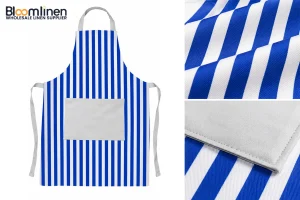
- Classic Stripes (Blue Stripe, Red Stripe): Professional, timeless aesthetics suited for traditional commercial prep lines and stations.
- Solid & Versatile Tones (SKY Blue, Black Floral): Clean, presentable options well-suited for open kitchens or front-of-house service.
- Vibrant Patterns (Orange Floral, Pink Floral, Blue Floral): Excellent options for bakeries, home kitchens, culinary demonstrations, or catering environments.
Why Canadian Hospitality Businesses Trust Bloom Linen for Commercial Aprons
Canadian hospitality businesses prefer sourcing aprons from Bloom Linen because they offer commercial-grade durability, generous full-body protection, and cost-effective bulk procurement tailored for high-volume operations. Engineered with reinforced stress-point stitching to withstand repeated industrial laundering cycles without fraying, these aprons provide long-term reliability for commercial kitchens, bakeries, and food service teams across Canada.
By combining full-coverage sizing with coordinated protective accessories—like matching oven mitts and potholders in versatile solid and patterned colorways—Bloom Linen enables businesses to equip staff safely while maintaining a clean, professional visual identity across both front-of-house and back-of-house operations.
Frequently Asked Questions
What are the standard dimensions for a full-coverage bib apron?
A standard full-coverage bib apron typically measures around 42″ in length, 32″ in width, and 36″ across the lower hem. This generous sizing ensures protection from the upper chest down to below the knees, offering comprehensive coverage against heat, grease, and food splatters.
Why is reinforced stitching important in kitchen aprons?
Kitchen aprons undergo constant pulling, stretching, and high-frequency laundering. Reinforced stitching at key stress points—such as the waist tie connections and pocket corners—prevents seams from fraying or tearing, dramatically extending the garment’s operational lifespan in busy commercial or home kitchens.
How do patterned aprons handle baking and prep messes?
Patterned designs—such as stripes or florals—help disguise minor flour dust, food flecks, and surface stains during active kitchen shifts. This keeps culinary staff looking clean and presentable without needing to replace or wash the apron mid-shift.
How should I wash and care for my full-coverage apron?
Machine wash your apron in cold or warm water with similar colors using mild detergent. Avoid harsh chlorine bleach to preserve fabric integrity and color vibrancy. Tumble dry on low heat or line dry to maintain seam strength over time.
Conclusion
Choosing the right apron ultimately comes down to finding a balance of generous coverage, durable construction, and practical utility for your specific kitchen environment. Sourcing full-coverage designs built with reinforced stitching ensures your kitchen team stays protected from heat, grease, and splatters while benefiting from textiles engineered to handle frequent laundering.
Whether outfitting a commercial line, equipping a bakery prep station, or cooking at home, investing in well-constructed aprons and coordinated heat-protection sets guarantees long-term reliability, enhanced safety, and a clean, professional standard across every shift.