
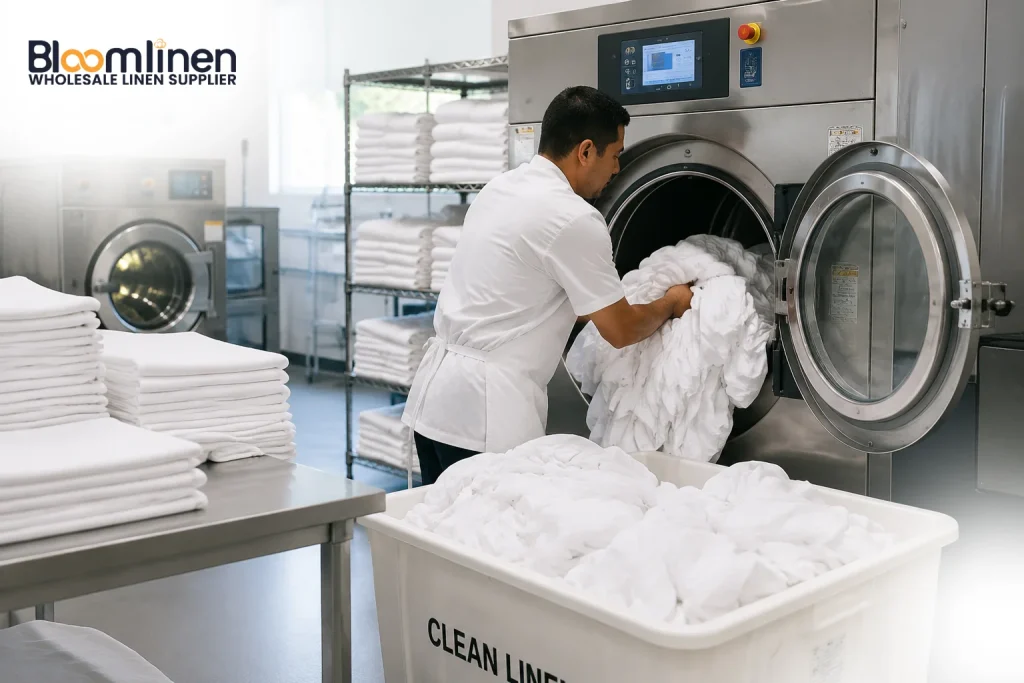
There is a universal, undeniable pleasure in sliding into a perfectly crisp, bright white hotel bed. The sheets feel impossibly fresh, cool to the touch, and practically glow in the dark. If you have ever tried to replicate this at home, you have probably ended up with dull, slightly yellowed linens that never quite capture that luxury resort feel.
The reality is that hotel-quality bedding isn’t magic. It is a carefully calibrated combination of commercial-grade washing techniques, specific chemistry, and heavy-duty machinery. We are pulling back the curtain on hotel laundry operations to answer your most pressing questions about hygiene, washing habits, and how you can steal these commercial secrets for your own bedroom.
How Do Hotels Wash White Sheets?
If you want to know how hotels get their sheets so pristine, you have to look past standard laundry detergent. Commercial laundry is a highly structured, multi-step process designed to lift stains completely while preserving the strength of the fabric.
Industrial washing machines follow a precise chemical formula. Here is exactly what happens during a professional wash cycle to achieve those brilliant results.
The Flush Phase: Rinsing Away Surface Soil First
Before any detergent touches the fabric, the sheets undergo a cool or lukewarm rinse called the flush phase. This step lasts for just a few minutes, but it is essential for protecting the fabric.
The flush removes loose, surface-level dirt and water-soluble soils before the main wash begins. By using cooler water, hotels prevent protein-based stains—such as sweat—from permanently setting into the cotton fibers. Starting with hot water would essentially bake those stains into the fabric, making them nearly impossible to remove later.
The Break Phase: Loosening Embedded Oils and Grime
Once the surface debris is gone, the machine enters the break phase. During this step, a highly alkaline chemical is added to the water.
Think of the break phase as a way to open up the fabric. The high alkalinity causes the cotton fibers to swell and relax, making it incredibly easy for the water to penetrate deep into the weave. This alkaline environment acts like a magnet for body oils, lotion residues, and grease, breaking them down so they can be easily swept away in the next step.
The Suds Phase: Lifting the Deepest Stains
With the fibers open and the oils loosened, the machine moves into the suds phase. This is the core washing step where professional-grade detergents and surfactants are introduced.
Surfactants are specialized molecules with a double mission: one end attaches to water, while the other attaches to dirt. As the massive commercial drum agitates, these molecules latch onto the loosened soil, pull it out of the fabric, and suspend it safely in the water. This ensures that the lifted dirt stays floating in the water rather than settling back onto the clean sheets.
The Rinse Cycles: Removing Every Trace of Dirt
After the main wash, the machine triggers a series of precise rinses. Industrial laundries typically use multiple short rinses rather than one long one, as this is far more effective at clearing away suspended soils.
These rinses gradually lower the water temperature and flush away all the dirty water, soap suds, and residual chemicals. Leaving even a tiny amount of detergent behind can dull the fabric, so thorough rinsing is key to keeping the sheets looking vibrant and feeling soft.
The Sour Phase: Balancing pH for Long-Lasting Brightness
This is the ultimate hotel secret that separates commercial laundry from home washing. After the high-alkalinity break phase and the detergent wash, the sheets have a high pH level. If the cycle stopped here, the remaining alkalinity would cause the fabric to feel scratchy against the skin and turn yellow under the heat of an iron.
To fix this, hotels introduce a mild, safe acid called a “sour” during the final rinse. The sour neutralizes the pH of the water, bringing it down to perfectly match the natural pH of human skin. This step strips away any microscopic mineral buildup from the water, prevents future yellowing, and leaves the linens feeling remarkably soft.
Ozone Washing: Harnessing Modern Technology for Cleaner Linens
Many forward-thinking luxury hotels are now upgrading their wash cycles with ozone laundry systems. This process involves injecting ozone gas directly into the wash water.
Ozone acts as a remarkably powerful natural sanitizer and oxidizing agent. When it comes into contact with organic soils on the sheets, it breaks them down rapidly. Because ozone works exceptionally well in cooler water, it allows hotels to thoroughly clean and sanitize bedding without relying on extreme heat. This gentle approach reduces wear and tear, keeping the cotton fibers strong, plush, and beautiful for a much longer time.
Do Hotels Bleach Sheets?
The short answer is yes, but not with the bleach you are thinking of.
There is a common misconception that hotels dump gallons of harsh household chlorine bleach into their machines. In reality, chlorine bleach is too aggressive; it degrades cotton fibers quickly and can actually cause a yellowish tint with repeated use.
Instead, commercial laundries rely on two secret weapons:
- Oxygen Bleach (Hydrogen Peroxide): Industrial-strength peroxide is much safer for cotton fibers over time. It attacks stains and lifts dirt without the harsh yellowing associated with chlorine.
- Optical Brighteners: Hotels use detergents laced with synthetic brighteners. These brilliant little additives absorb invisible UV light and re-emit it as a visible blue light. This tricks the human eye, making the sheets look dazzlingly, impossibly white.
How Bloom Linen Bedding Supports Commercial Laundry Standards
Optimizing an advanced wash cycle requires a textile built to withstand the rigorous demands of institutional laundering. Bloom Linen’s wholesale bedsheet collections are specifically engineered to support these commercial standards, utilizing high-tensile cotton percale weaves that handle the precise alkalinity and pH shifts of professional processing effortlessly. By focusing on structural durability and excellent fiber recovery, these premium linens maintain their vibrant brightness and signature crisp texture through extensive rotation cycles, making operational efficiency simple for hospitality properties.

Are Hotel Bed Sheets Clean?
Traveler anxiety about hotel hygiene is common, but rest assured: hospitality standards for linens are incredibly strict. Hotels utilize thermal disinfection, meaning the water reaches high enough temperatures for a sustained period to eradicate pathogens completely.
How often do hotels wash sheets?
Between guests, there is a mandatory 100% turnover of all bed linens. During a guest’s stay, however, the industry has shifted. Thanks to eco-friendly initiatives, most hotels now wash sheets every three days unless a guest specifically requests a daily change.
To keep sheets from wearing out under this intense washing schedule, hotels use a “par level” system. A standard hotel keeps three or four sets of sheets per bed in their inventory (one on the bed, one in the wash, and one resting in storage). Giving cotton fibers 24 hours to “rest” between washes helps them recover their elasticity and softness.
How to Get Crisp Sheets Like Hotels
You can wash your sheets perfectly, but if you tumble-dry them on high heat, you will never get that hotel crispness. The secret to crisp sheets lies in how they are dried.
Hotels do not toss their linens into standard tumble dryers until they are bone dry. Instead, they run the sheets through massive, heated roller machines called flatwork ironers (or manglers) while the fabric is still about 20% damp. The machine literally bakes the remaining moisture out while pressing the sheets flawlessly flat.
Furthermore, hotels set themselves up for success by choosing the right fabric. They almost exclusively use 100% cotton percale. Percale is a specific type of weave that is naturally crisper, cooler, and more breathable than slippery sateen or synthetic microfiber.
Conclusion
Maintaining the iconic brightness and crisp texture of hotel bedding comes down to a perfect partnership between precise laundry science and high-quality fabric design. From balancing the chemical pH during the final rinse to selecting linens specifically engineered to withstand institutional wear, every detail plays a crucial role in creating a premium sleep experience. By combining rigorous operational standards with high-performance textiles, properties can consistently deliver the flawless, refreshing environment that guests look forward to night after night.