
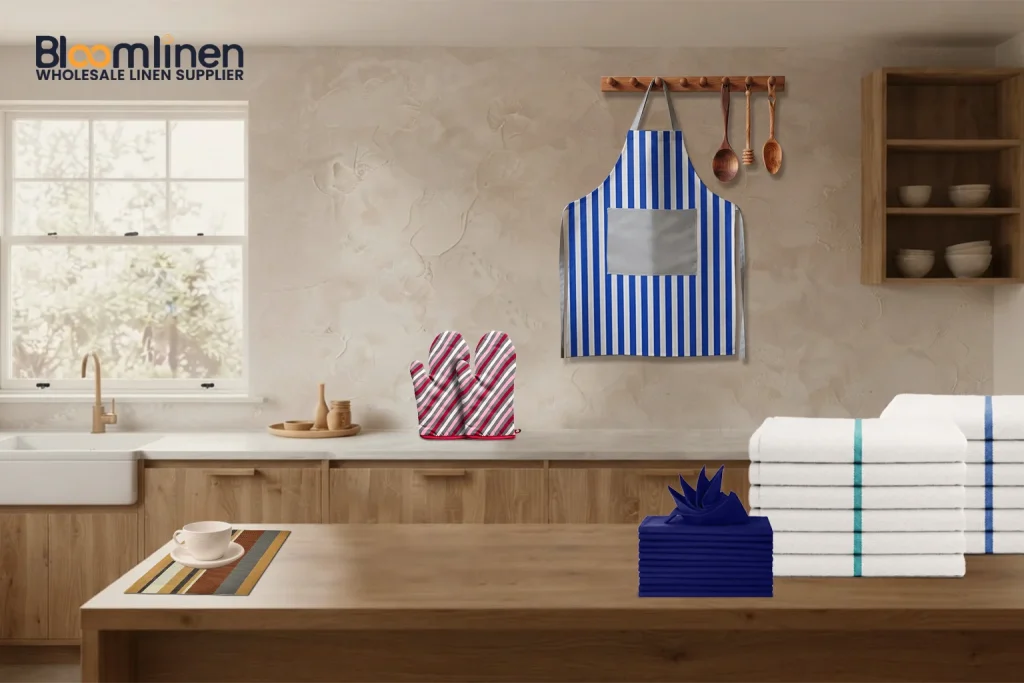
Managing higher education housing requires balancing resident utility with long-term operational durability. As university accommodation designs shift toward suite-style units, micro-apartments, and shared living spaces, outfitting student facilities with reliable basic kitchen setups has become standard practice.
For university housing directors, campus facility managers, and procurement officers, outfitting these facilities isn’t just about outfitting a space—it’s about managing replacement cycles, mitigating safety risks, and staying within budget. Providing institutional-grade textile packages helps protect facility assets, supports campus sustainability goals, and prevents unnecessary supply turnover costs across academic terms.
Here is the definitive dorm room kitchen essentials list designed for commercial buyers outfitting student housing at scale.
Key Takeaways:
- Commercial-grade kitchen linens reduce long-term replacement costs for campus housing.
- Heat-resistant mitts protect residents and mitigate property damage liability.
- Reusable cloth linens lower paper waste and support university sustainability goals.
Core Kitchen Linen Essentials for Campus Housing
These are some of the must-haves for college dorm kitchens:
1. Commercial-Grade Kitchen Towels & Bar Mops
Standard retail towels degrade quickly under the heavy usage and rigorous laundering conditions typical of student housing. Heavy-duty commercial kitchen towels serve as the frontline defense against spills, surface moisture, and routine dish drying in shared kitchen spaces.
- Operational Focus: Maximum absorbency, structural integrity under high temperatures, and resistance to commercial laundering cycles.
- Key Specifications: 100% ring-spun cotton or dense cotton-terry weaves, reinforced double-hemmed edges to prevent unraveling, and bleach-safe yarn dyeing.
- Procurement Value: Low-quality towels fray and lose absorbency quickly, leading to frequent reorders. Investing in institutional-grade kitchen towels in bulk multi-packs reduces unit maintenance calls and lowers the total cost of ownership across the academic year.
2. Heat-Resistant Oven Mitts & Pot Holders
When student residents prepare hot meals in dorm kitchens, safety compliance and property protection are top priorities. Providing dedicated heat-resistant gear is a direct approach to risk management.
- Operational Focus: Resident safety, liability mitigation, and protecting countertops from thermal damage.
- Key Specifications: Heavy-duty cotton terry or silicone-coated exteriors rated for high temperatures, flame-retardant linings, and integrated hanging loops for accessible storage.
- Procurement Value: Standardizing heat protection across all campus residential units helps prevent accidental burn injuries and reduces thermal scarring on dorm cabinetry and countertops, making these safety products core dorm kitchen essentials.

3. Reusable Cloth Napkins
As universities prioritize Environmental, Social, and Governance (ESG) criteria, reducing paper waste in residential facilities has become a key target. Reusable cloth napkins offer an eco-friendly alternative for suite kitchens and communal dining areas.
- Operational Focus: Supporting campus sustainability initiatives and lowering ongoing waste disposal volume.
- Key Specifications: 100% spun polyester or stain-resistant poly-cotton blends engineered for color retention and lint-free performance across industrial wash cycles.
- Procurement Value: Replacing single-use paper napkins with durable cloth options lowers recurring supply expenses for extended-stay student residences and aligns facilities directly with campus zero-waste benchmarks.
Optional Upgrades: Surface Protection & Specialty Housing
These are a few nice-to-have linen goods for dorms:
4. Protective Table Placemats
Laminate tables and dining surfaces in student apartments take a heavy beating over an academic term. Protective placemats act as a sacrificial layer against heat, moisture, and scratch damage.
- Operational Focus: Facility surface preservation, easy sanitation, and maintaining room aesthetics.
- Key Specifications: Non-porous, wipe-clean synthetic materials or heavy washable woven fabrics proportioned for compact dining setups.
- Procurement Value: Preventing liquid rings, food stains, and surface scratches on dorm-provided furniture extends the operational lifecycle of capital assets, deferring furniture replacement costs for years.

5. Institutional & Dining Staff Aprons
While not required in every basic room package, aprons are key additions for specialized campus living arrangements, such as culinary interest dorms, resident advisor (RA) event kits, or campus housing dining staff.
- Operational Focus: Clothing protection during communal cooking activities and uniform standardization for housing staff.
- Key Specifications: Adjustable neck straps, bar-tacked stress points at seam joins, stain-release fabric finishes, and deep utility pockets.
- Procurement Value: Durable, soil-resistant aprons protect wearers during community-building culinary workshops and provide long-lasting wear for facility maintenance and resident support crews. These versatile items fulfill unique operational needs when identifying kitchen dorm essentials for institutional programs.
Why Dorms Prefer to Source from Bloom Linen?
University housing directors and facility managers partner with Bloom Linen because our commercial textiles are specifically engineered for the heavy wear and relentless industrial laundering of campus life. By combining dense, durable weaves with direct wholesale pricing and reliable pre-semester delivery schedules, Bloom Linen helps institutional buyers cut replacement costs, meet campus ESG sustainability goals, and streamline move-in logistics.

Frequently Asked Questions
What is the recommended stocking ratio of kitchen linens per dorm or suite unit?
For standard suite-style living quarters (4–6 residents), we recommend stocking 4 to 6 commercial kitchen towels, 1 pair of heavy-duty heat-resistant oven mitts with 2 pot holders, and 4 to 8 reusable cloth napkins per resident. Keep an additional 10–15% replacement buffer in facility storage for mid-semester replacements.
Can kitchen linen packages be pre-bundled into move-in kits for suite units?
Yes. For large-scale university deployments, products can be pre-sorted and packaged into unit-ready kits (e.g., 4 towels, 2 pot holders, 1 pair of mitts per bundle). This streamlines pre-semester logistics for residence hall staff and speeds up the room preparation process.
How do we prevent loss and theft of kitchen textiles in communal residence halls?
Loss prevention in campus housing relies on clear inventory tracking. Utilizing color-coded woven borders by building or floor, applying custom university property stamps, or charging unit-based move-out inventory checklists helps minimize product shrink across the school year.
Conclusion
Outfitting student housing at scale requires a strategic balance between resident utility, safety compliance, and long-term fiscal responsibility. By equipping your campus residences with commercial-grade kitchen linens—from high-absorbency towels to heat-resistant safety mitts—you extend the lifecycle of your facility assets, support university ESG initiatives, and significantly reduce annual replacement overhead. Contact Bloom Linen’s commercial sales team today to request physical product samples, explore bulk volume pricing, or customize a pre-semester linen package tailored specifically to your campus operations.