
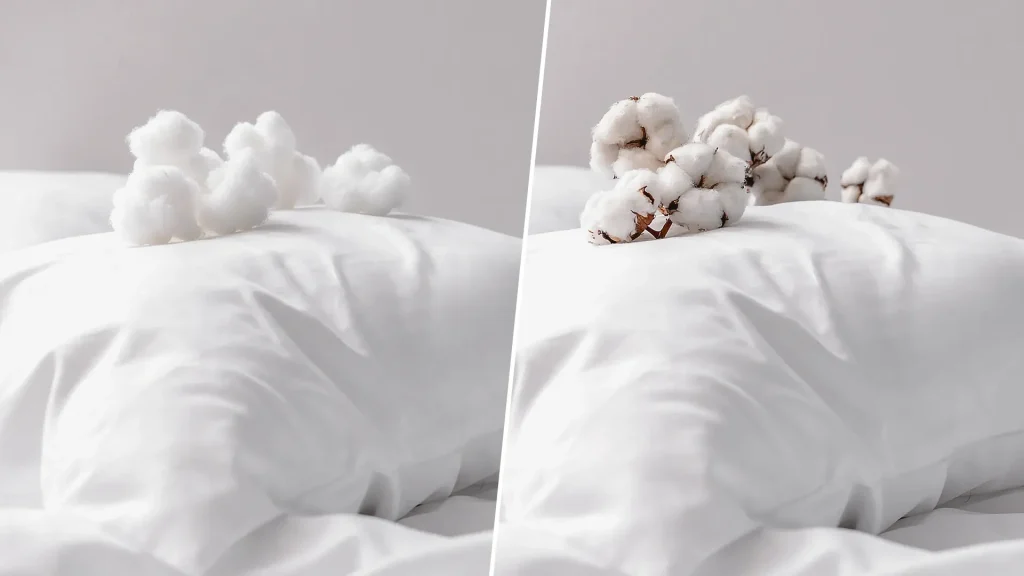
Microfiber and cotton pillows have a direct impact on maintenance cost and guest experience. This makes it valuable for hospitality businesses to compare cotton pillows with microfiber pillows based on their airflow performance, maintenance, price, and other factors. The debate of microfiber vs cotton pillow usually centers on natural versus synthetic materials and overall performance.
This guide will cover everything that a hospitality professional should know when comparing pillows made with different materials.
Key Takeaways:

- Cotton pillows offer breathability and a premium feel, which makes them ideal for luxury rooms and warmer climates.
- Microfiber pillows perform better in high-turnover settings as they provide operational efficiency.
- Climate, occupancy rate, and room category should guide your purchasing decision.
What Is a Cotton Pillow?
A cotton pillow comes with a natural fiberblend. Their filling material makes it great at moisture absorption and also feels soft on the guest’s skin. Cotton pillows are also considered a more eco-friendly option than other material options for pillow filling.
Pros of Cotton Pillows
- Cotton naturally adjusts to body temperature to make guests feel comfortable in warm and moderately cool environments.
- They are less likely to cause noisiness and preferred choice for people with sensitive skin.
- Luxury hotels prefer cotton pillows because of their soft and crisp feel.
Cons of Cotton Pillows
- They usually have a slightly higher upfront price compared to synthetic options.
- Natural fillings are often heavier and denser than microfiber alternatives.
What Is a Microfiber Pillow?
A microfiber pillow is filled with polyester-based synthetic fibers. They are lightweight and give a fluffy feel to guests. Microfiber pillows are commonly preferred in hospitality businesses where affordability is preferred over experience.
Pros of Microfiber Pillows
- When evaluating a microfiber pillow vs cotton pillow, microfiber is considered a much more cost-effective option, especially in bulk purchasing.
- Synthetic microfiber filling maintains its loft longer even in high-occupancy commercial settings.
- Synthetic materials usually have more stable pricing compared to natural fiber fills.
Cons of Microfiber Pillows
- Microfiber pillows tend to retain heat and affect comfort in higher-temperature environments.
- They give a more affordable perception to guests than luxury.
- Polyester-based materials do not align with the eco-friendly image or sustainability goals of businesses.
Cotton Vs Microfiber Pillows – Key Differences
The following are the key differences between pillows with cotton and microfiber fills:
Cotton Pillows | Microfiber Pillows |
Natural cotton or fiber blend | Polyester-based synthetic fibers |
Stable, structured, soft, and premium; ideal for luxury rooms | Fluffy, adaptive, contours easily; suitable for standardized rooms |
Silent and smooth | May produce soft crinkling in lower-quality options |
Best for luxury suites, executive floors, and hotels in tropical regions | Frequently booked hotels, motels, guest rooms, properties with frequent guest changes |
Higher upfront investment | More cost-effective, especially for bulk purchasing |
More sustainable and eco-friendly | Polyester-based, less aligned with sustainability goals |
1. Maintenance
Cotton pillows require more care than microfiber options. It’s caution become even more crucial in commercial settings to maximize their lifespan. Too much exposure to high heat can cause cotton to shrink and affect the overall size as well. All of this makes having a pillow protector a must-have essential to extend their lifespan.
Microfiber pillows demand much less maintenance compared to cotton options. They are constructed specifically for commercial operations. The Polyester-based filling is also resistant to shrinkage, maintaining consistent dimensions over time.
2. Comfort Feel
A study on moisture management properties in ASTM International Journal found that cotton absorbs moisture more effectively than any of its alternatives. Cotton pillows give a stable and structured sleeping surface that doesn’t feel overly plush. In hospitality settings, they offer a fresh and natural bedding impression, especially when paired with breathable cotton pillow cases.
On the other hand, microfiber pillows are known for their adaptive feel. Fiber adapts quickly to movements, allowing the pillow to contour easily as guests change sleep positions. Microfiber pillows’ uniform surface makes them suitable for businesses looking for fixed-quality pillow options.
3. Noise & Texture Differences
Most guests associate cotton-filled beddings with high-end beddings due to their soft texture. Therefore, businesses in the hospitality industry seeking premium positioning prefer them over synthetic options. However, their texture can only be retained if taken care of properly.
Low-quality microfiber pillows usually produce a soft crinkling noise as the fiber moves, while cotton pillows are completely silent. Still, their silky texture is suitable for different sleeping preferences, making it ideal for regularized bedding in commercial properties.
4. Hypoallergenic Properties
Natural fibers are commonly used in hospital settings as they are less likely to trigger allergies. They are better at air circulation and moisture-wicking, which makes it harder for dust mites and bacteria to grow.
Microfiber material is less breathable than cotton and can trap dust mites or bacteria within the pillow. If maintained properly, the risk of mildew is reduced significantly.
5. Heavy-Use Suitability
Most hospitality businesses with high occupancy look for pillows crafted for frequent usage, daily room servicing, and repeated laundering. However, this is also the area where cotton pillows fall behind. They are not made for high-volume usage and are likely to wear off quickly. Additionally, cotton is heavier than synthetic alternatives, which can make bed-making slightly more labor-intensive for housekeeping staff.
On the flip side, microfiber pillows are the complete opposite. They are lightweight and also dry faster, which allows faster room readiness with lesser effort.
Which Is Better for Hospitality Usage?

If we compare cotton pillows vs microfiber pillows, both have different advantages in lodging businesses. Here, we have compared both based on their usage in hospitality use-cases:
1. Low Vs High-Turnover Rooms
5 star hotels, luxury suites, and executive floors where occupancy is low/moderate and room rates are higher, cotton pillows are considered a stronger choice. These rooms experience less frequent washing and handling. Therefore, cotton pillows can maintain their properties while giving a premium guest experience.
Room occupancy rate plays a major role in deciding between a cotton and a microfiber pillow. Microfiber pillows generally perform better in hotels and motels with short-term rentals like daily check-ins and outs. The reason is simply their longer lifespan with the ability to resist shrinkage, and a minimum delicate handling requirement.
2. Climate & Guest Preferences
Cotton pillows perform better in hotter regions and properties. Guests who tend to sleep hot may appreciate the cooler and more airy feel of cotton, especially when paired with breathable pillow cases. Combining all of this makes cotton filling a better choice for beachfront resorts, tropical hotels, and summer-season properties.
In air-conditioned hotels or properties located in cooler climates, microfiber pillows can deliver consistent comfort year-round. Their slightly warmer composition can feel cozy rather than overheating in temperature-controlled rooms. Because microfiber maintains uniform loft and softness, it provides predictable comfort across different seasons without major variation in performance.
3. Luxury & Standard Rooms
In luxury rooms, every detail contributes to perceived value, and cotton pillows give more of a premium feel to guests. Although cotton requires more careful maintenance, the enhanced experience can justify the investment in luxury segments.
For mid-range hospitality businesses, operational efficiency and cost control are the top priorities. Microfiber pillows provide exactly that. They are a comparatively affordable option, especially for hotels looking to maintain a uniform quality across multiple rooms.
Final Verdict:
Choosing between cotton and microfiber pillows ultimately depends on your property’s operational needs and brand positioning. Browse our full wholesale pillow collection to find suitable options for luxury and mid-range rooms alike. Cotton pillows offer natural breathability, a premium feel, and strong appeal in luxury rooms or heat-prone regions, but they require more careful maintenance and may wear faster in high-occupancy settings. Microfiber pillows, on the other hand, provide durability and cost-efficiency, making them ideal for hotels with frequent occupancy and spacious rooms and setups.